Olympic archery is the pinnacle of precision sport — 64 archers, recurve bows only, shooting at a 122 cm target from 70 meters with less than 40 seconds per arrow. It demands elite technique, unshakable mental composure, and years of dedicated training. Whether you want to understand what you watch at the Olympics or you are a young archer aiming for the podium yourself, this complete guide to Olympic archery rules, Olympic archery equipment, qualification, and training covers everything you need to know.
🏅 Olympic Archery at a Glance
📋 Olympic Archery Format Explained
The Olympic archery competition format was revamped by World Archery to create more exciting, television-friendly head-to-head competition. Here is how it works:
Ranking Round (Qualification)
All archers shoot 72 arrows in 12 ends of 6 arrows each. Each arrow scores 1–10 points. The total score out of 720 maximum determines seeding. The top seed (rank 1) shoots against rank 64 in the first elimination round. Scores of 680+ at 70 m are typical at Olympic level.
Elimination / Match Play (Set System)
Olympic elimination rounds use the set system rather than cumulative scoring:
| Round | Arrows per Set | Win Condition |
|---|---|---|
| Individual match | 3 arrows per set | Win set = 2 set points; tie = 1 each. First to 6 set points wins. |
| Tiebreaker | 1 arrow each | If tied at 5–5, one arrow each. Closest to centre wins. Ties measured. |
| Team match | 6 arrows per set (2 per archer) | First team to 5 set points wins. Tiebreak: 2 arrows per archer. |
| Mixed team | 4 arrows per set (2 per archer) | Same 5 set points format. |
⏱️ Time Limits: Each archer has 40 seconds per arrow in individual matches and 20 seconds for the final tiebreak shot. In team rounds, the three archers share 80 seconds total for their six arrows — coordination and speed matter.
🏅 Olympic Archery Events
Men's Individual
64 men compete through ranking round, then head-to-head elimination to the gold medal match.
Women's Individual
64 women compete through the same format. South Korea has dominated this event for decades.
Men's Team
12 national teams of 3 archers. The ranking round scores of the 3 team members are combined to seed teams.
Women's Team
12 national teams compete in the same format. South Korean women won gold at 9 consecutive Olympics (1988–2021).
Mixed Team (Added at Tokyo 2020)
One man and one woman per nation compete together. Added to the Olympic programme at Tokyo 2020, adding a fifth gold medal in archery.
🏹 Olympic Archery Equipment Rules
Olympic archery has strict equipment regulations enforced by World Archery. The most important rule: only recurve bows are permitted. Compound bows are not an Olympic discipline (they compete separately at the World Archery Championships and Para-archery).
Allowed Equipment
Recurve Bow
A recurve bow with a separate riser and limbs. No mechanical advantage devices (no cams or pulleys). Typical Olympic draw weights: 44–52 lbs for men, 34–44 lbs for women. Standard riser length: 25" with 68"–70" total bow length.
Sight
An adjustable bow sight is allowed. Optical magnification (lenses, scopes) is not permitted. Archers use a pin or ring sight, adjusted for exact distance and conditions.
Stabilisers
Long rod stabiliser (typically 28"–34"), two v-bar mounted side rods, and a back bar are standard. Stabilisers can be made from carbon fibre. They reduce bow torque and movement after release. Olympic archers spend thousands on stabiliser systems.
Arrow Rest
A pressure button (plunger) and arrow rest combination is standard. The plunger acts as a tuning device and dampens horizontal arrow oscillation through the paradox during release.
Finger Release (No Mechanical Release Aid)
Olympic archers shoot with a finger tab using the Mediterranean draw (3 fingers under the arrow). Mechanical release aids used in compound archery are not permitted in Olympic recurve events.
Arrows
Typically X10 or A/C/E aluminum-carbon composite arrows. Small diameter arrows hit the higher zone when on a line — a significant advantage. Arrow diameter at the Olympic level is extremely important for scoring marginal shots. World-class archers typically use arrows in the 550–700 grain range.
🚫 Not Permitted in Olympic Recurve
🎯 Olympic Archery Scoring
The Olympic target face is 122 cm in diameter, divided into 10 concentric scoring zones. Understanding the scoring system helps you appreciate how precise Olympic-level shooting really is.
| Zone | Color | Score | Diameter at 70 m |
|---|---|---|---|
| X (inner 10) | Yellow | 10 pts | 6.1 cm — about the size of a golf ball seen at 70 m |
| 10 | Yellow | 10 pts | 12.2 cm |
| 9 | Yellow | 9 pts | 24.4 cm |
| 8 | Red | 8 pts | 36.6 cm |
| 7 | Red | 7 pts | 48.8 cm |
| 6–1 | Blue, Black, White | 6–1 pts | Up to 122 cm total |
For a complete breakdown of archery scoring systems including field and 3D rules, see our dedicated archery scoring rules guide.
🌟 Legendary Olympic Archers
Brady Ellison (USA)
Multiple Olympic medalsThe dominant force in men's recurve archery since 2010. Five-time World number one, multiple World Championship gold medals, bronze at Tokyo 2020. Known for his loose, back-tension release technique and exceptional mental game.
Im Dong-Hyun (South Korea)
World Record HolderSet the world record with 699/720 in the ranking round at London 2012 — remarkable because he is legally blind and cannot read the target face, relying instead on blur detection. Three-time Olympic gold medalist.
Ki Bo-Bae (South Korea)
Three Olympic GoldsSet the Olympic record in the ranking round at London 2012, won gold in individual and team events. Part of the South Korean archery dynasty that has produced the most dominant programme in Olympic archery history.
An San (South Korea)
Triple Gold at Tokyo 2020Won three gold medals at Tokyo 2020 (individual, team, mixed team), becoming the first archer to win three golds at a single Olympics. Shot scores that would have won the men's ranking round. One of the greatest single-Games performances in Olympic archery history.
🎟️ How Athletes Qualify for Olympic Archery
Olympic archery qualification is one of the most competitive pathways in sport. Nations qualify team spots, not individual archers — the national federation then selects which athletes fill those spots.
Team Quota Places
Nations earn team quota places (3 athletes) at designated qualification events — typically World Championships and continental championships in the 12–18 months before the Olympics. Top-ranked nations in the qualification standings earn team quota.
Individual Quota Places
Nations that do not qualify team spots can earn individual quota places through World Archery ranking tournaments. Individual quota archers cannot form a team at the Games.
Host Nation
The host nation automatically qualifies one team quota in each gender if they have not already qualified through the standard pathway.
🏋️ How to Train for Olympic-Level Archery
You do not need to be aiming for the Olympics to benefit from training like an Olympic archer. The methods used by world-class recurve archers are directly applicable to improving your own shooting.
Technical Foundation
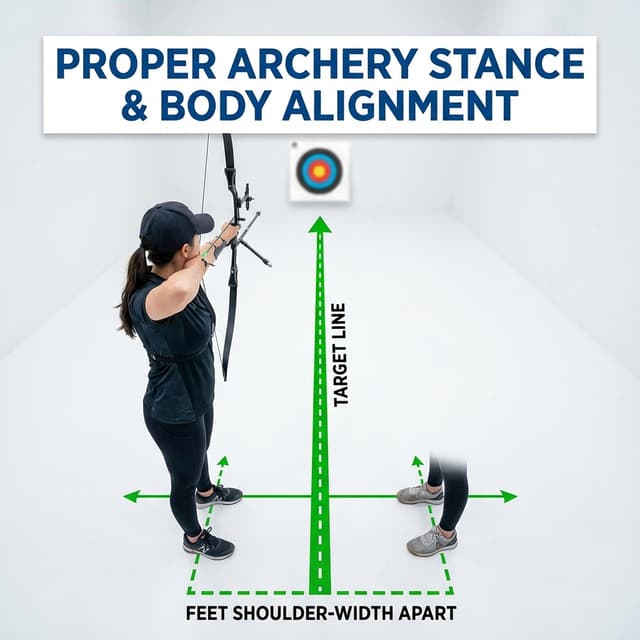
- • Master stance and alignment first (see our stance guide)
- • Lock in a consistent anchor point
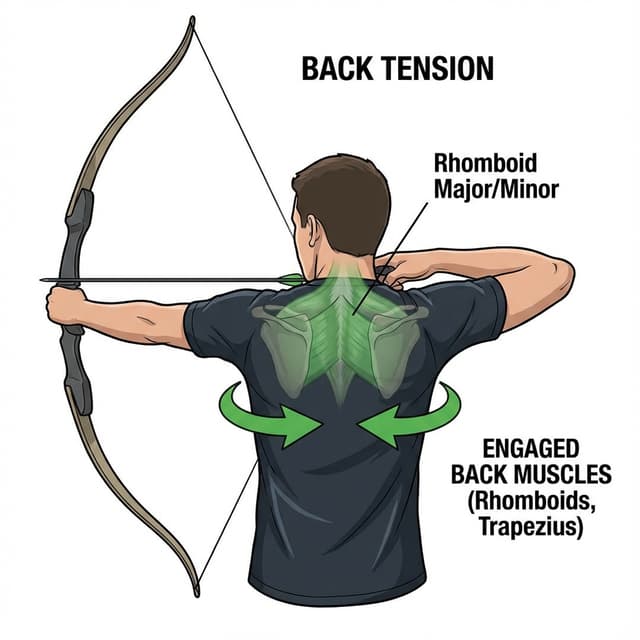
- • Develop back-tension release (not finger pinch)
- • Build a pre-shot routine and follow it every shot
Physical Conditioning
- • Resistance band training for draw muscles
- • Core stability (planks, Pilates)
- • Shoulder stability (rotator cuff exercises)
- • Endurance for 72-arrow ranking rounds
Mental Game
- • Mental rehearsal and visualisation
- • Develop process focus (not score focus)
- • Compete regularly to simulate pressure
- • Work with a sports psychologist if serious
Volume and Structure
- • Elite archers shoot 150–300 arrows daily
- • Club archers: 60–90 arrows per session
- • Structured practice > random shooting
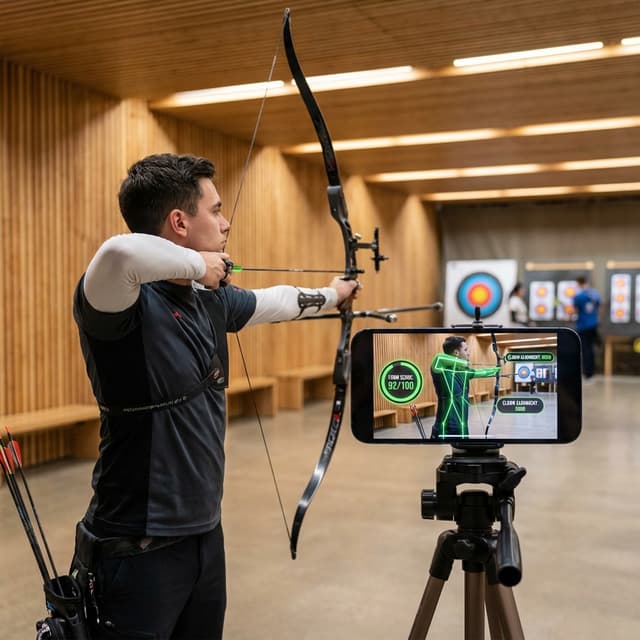
- • Film and review form regularly
📱 Use Technology to Train Smarter
AI-powered form analysis, arrow impact tracking, and session logging can dramatically accelerate your development. Tools like ArcheryBuddy put elite-level feedback in your pocket. Read our guide on how to use AI form analysis to get the most from technology in your training.
🚀 How to Get Started in Olympic Archery
Find a certified recurve archery coach
USA Archery, Archery GB, and other national bodies maintain coach directories. A certified Level 2 or higher coach is essential — self-teaching recurve form often ingrains errors that take years to correct.
Join a JOAD or Olympic-affiliated club
In the USA, USA Archery's Junior Olympic Archery Development (JOAD) programme is the primary pathway. In the UK, Archery GB county clubs offer similar structured development.
Start competing at local level
Enter local and state/regional tournaments as soon as your coach thinks you are ready. World Archery points accumulate from approved tournaments — start building a ranking early.
Progress through national rankings
National championships, selection trials, and World Cup events are the route to the national team. Most Olympic archers begin competitive shooting in their early to mid teens.
Train Like an Olympic Archer
ArcheryBuddy gives you AI form analysis, session tracking, and improvement metrics to train smarter on your journey toward Olympic-level archery. Free on iOS and Android.