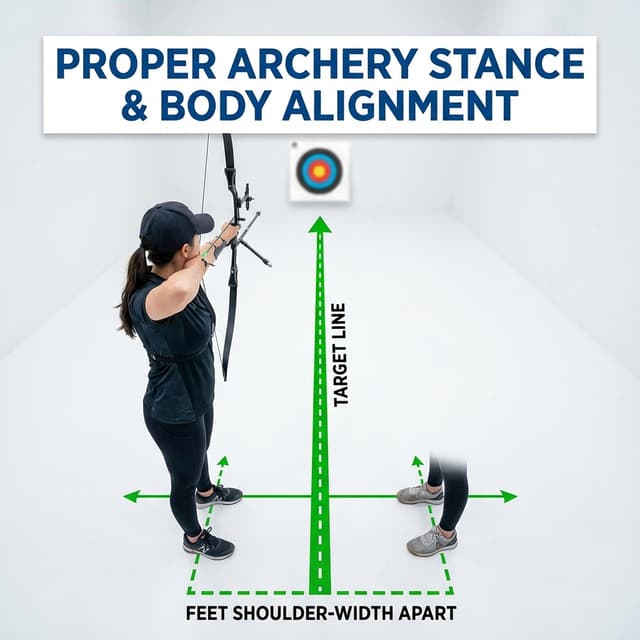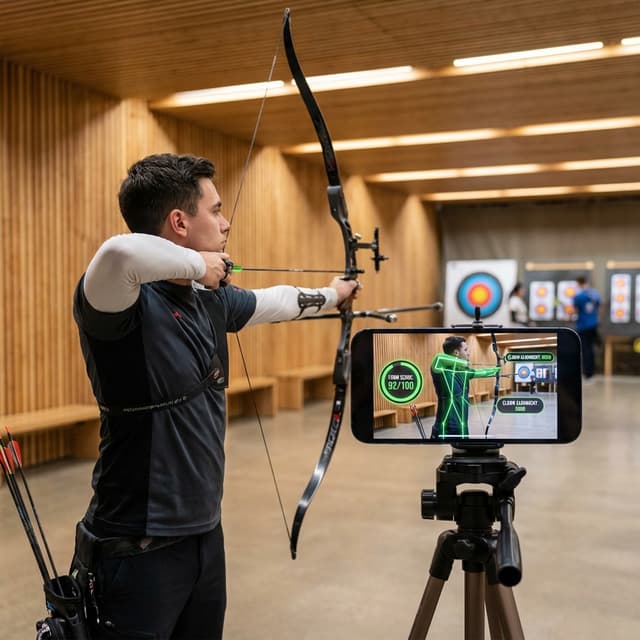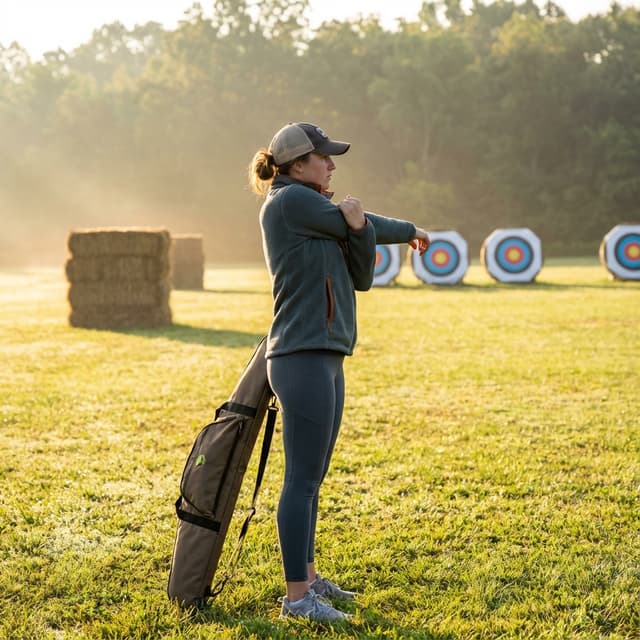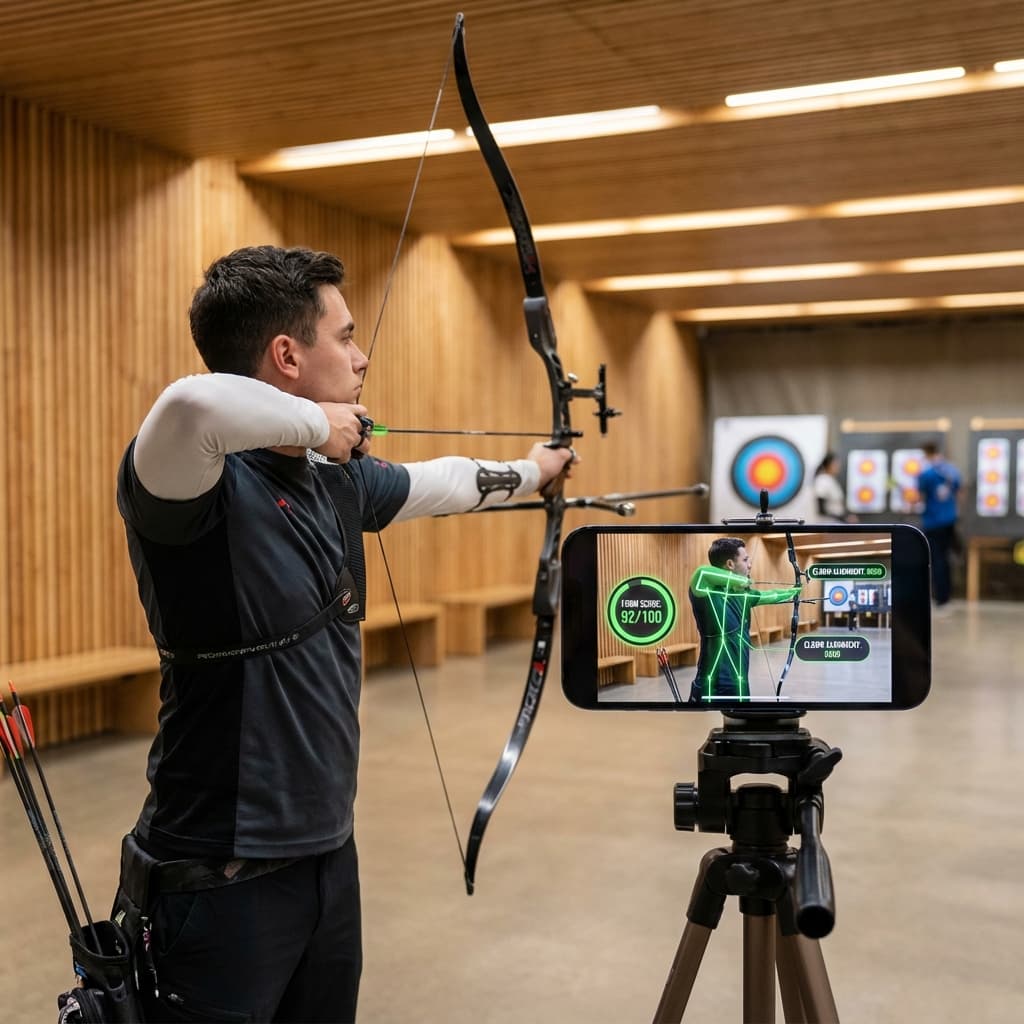
Indoor archery is one of the most accessible and rewarding forms of the sport. No wind, no rain, controlled lighting, and a predictable environment — it's the perfect setting for developing precision and consistency. Whether you're shooting at a local range or gearing up for your first indoor competition, this complete guide covers everything you need to know.
⚡ Indoor Archery at a Glance
- • Standard distances: 18 meters (WA Indoor), 20 yards (NFAA)
- • Target face: 40cm (WA) or 60cm full face
- • Scoring: 10 rings, X-ring in center (WA) / 5 rings (NFAA)
- • Rounds: 60 arrows (WA), 300 Round (NFAA)
- • Bow types: All — recurve, compound, barebow, traditional
🏠 Why Indoor Archery?
Indoor archery has exploded in popularity because it removes the most frustrating variable in archery — the weather. Wind alone can shift an arrow 6–10 inches at 70 meters outdoors. Indoors at 18 meters, every miss is on you, making it the ultimate test and teacher of archery form and consistency.
Advantages of Indoor Archery
- ✅ No wind, rain, or sun glare to contend with
- ✅ Consistent lighting (or low light that tests aiming)
- ✅ Year-round shooting regardless of weather
- ✅ Shorter distance (18m/20yd) makes mistakes clearer
- ✅ More arrows per session — faster improvement
- ✅ Easier to set up a scoring routine for tracking progress
- ✅ Social — ranges have a club-like atmosphere
Considerations
- ⚠️ Short distance amplifies form errors in scoring (every mistake shows)
- ⚠️ Low light at some ranges requires good sight picture discipline
- ⚠️ Range fees vary ($5–$20 per session)
- ⚠️ Lane time can be limited during busy periods
- ⚠️ Equipment may need adjustment vs outdoor setup
📏 Standard Distances & Target Faces
Indoor archery distances are strictly standardized depending on the governing body. Understanding which format applies to your range or competition is essential before you adjust your sight or equipment.
| Format | Distance | Target Face | Arrows | Max Score |
|---|---|---|---|---|
| WA Indoor (World Archery) | 18 meters | 40cm (recurve) / 40cm (compound) | 60 arrows | 600 |
| NFAA Indoor (USA) | 20 yards | 40cm blue/white face | 60 arrows | 300 |
| Vegas Round (USA) | 20 yards | 40cm (3-spot or single) | 60 arrows | 300 |
| WA 25m Indoor | 25 meters | 60cm standard face | 60 arrows | 600 |
| Junior/Club rounds | 10–15 meters | 60cm full face | Varies | Varies |
Understanding Target Faces
- • WA 40cm face: 10 rings from gold center outward. Ring values 10, 9, 8, 7, 6, 5, 4, 3, 2, 1. The X ring inside the 10 ring is used as a tiebreaker.
- • NFAA face: Blue and white rings — 5, 4, 3 (no X ring in standard). The blue inner circle scores 5.
- • 3-spot face: Three small target faces on one paper; archers shoot one arrow per spot per end. Reduces wear on a single spot and makes scoring cleaner.
- • Triple-spot: Used heavily at the Vegas Shoot and pro compound events.
🏆 Indoor Archery Scoring
Understanding indoor archery scoring is straightforward once you know the format. The most common system used internationally (WA Indoor) scores each arrow from 1–10, with an X ring in the center for tiebreakers.
WA Indoor Scoring (18m)
- • X ring (innermost): 10 points + tiebreaker
- • Gold (10): 10 points
- • Gold (9): 9 points
- • Red rings (8, 7): 8 and 7 points
- • Blue rings (6, 5): 6 and 5 points
- • Black rings (4, 3): 4 and 3 points
- • White rings (2, 1): 2 and 1 points
- • Miss (M): 0 points
- • Perfect score: 600 (60 arrows × 10)
How an End Works
- • An "end" = a set of arrows (typically 3 arrows per end for WA Indoor)
- • Shoot 3 arrows, walk to target, score and pull
- • 20 ends × 3 arrows = 60 arrows total
- • Arrow in line: Always scores the higher ring value
- • Bounce-out: Arrow bounces off — must be witnessed to score
- • Pass-through: Arrow goes through target — may score if observed
Benchmark Scores (WA Indoor 18m / 600)
- Beginner (first year): 400–480
- Intermediate: 480–540
- Club level: 540–560
- Regional competitor: 560–575
- National level: 575–590
- World class: 590–600
⚙️ Equipment Adjustments for Indoor Shooting
Your outdoor setup may not be ideal for indoor shooting. The short 18-meter distance, indoor lighting, and tight target face all call for specific equipment tweaks.
Sight Adjustments
- • Move your sight pin or set a new pin specifically for 18m/20yd — don't assume outdoor distance settings transfer directly
- • Indoor distances are shorter, so your pin will be lower than your outdoor 30m or 40m settings
- • Larger apertures (peep hole or scope aperture) are popular indoors to let in more light in dimmer range lighting
- • Consider a clarifier lens for the peep sight if you use a scope — indoor lighting can make aiming fuzzy without it
Arrow Selection for Indoors
- • Smaller diameter arrows are advantageous indoors — a thinner arrow that clips the 10 ring line scores 10, while a fatter arrow might score 10 more often but is harder to remove from dense targets
- • Popular indoor arrows: Easton X10 (recurve elite), Easton Aftermath (mid-level), Victory VAP (compound small-diameter)
- • Stiffer spine often preferred indoors — the short distance gives less time for arrow flex to dampen
- • Lighter arrows are not needed indoors (no wind) — prioritize accuracy and line-cutting ability
Stabilizer Setup for Indoors
- • Shorter long rod is common indoors (28–30 inches vs 32–34 inches outdoors) — easier to maneuver in tighter range spaces
- • Less side bar weight often used — the controlled environment needs less damping than outdoors
- • Some archers use no side rod indoors to reduce bow noise and simplify setup
- • Compound archers may reduce wrist sling tension slightly to get a more consistent grip in the reduced-stress environment
💡 Indoor Archery Tips for Better Scores
Focus on the Process, Not the Score
Indoor archery at 18m exposes every form flaw. Use indoor sessions to focus on your pre-shot routine, back tension execution, and follow-through — not the scoreline. Consistent form automatically produces better scores.
Adapt to Dimmer Lighting
Many indoor ranges have lower lighting than outdoor conditions. Give your eyes 5–10 minutes to adjust before your first end. Some archers use a lens in their peep sight to sharpen the sight picture. Avoid shooting immediately after entering from bright sunlight.
Manage the Mental Game at Short Distance
18 meters can feel deceptively easy, which paradoxically increases mental pressure. The small target face means a 1–2mm form deviation is the difference between a 10 and an 8. Control your breathing between shots and use a consistent pre-shot routine to manage pressure-induced target panic.
Track Your End Scores
Write down your score per 3-arrow end, not just the total. Patterns reveal where you lose points — early in the session (warm-up), mid-session (fatigue setting in), or late (mental drift). This is far more actionable than just knowing your final 580.
Respect the Time Limit
Competitions allow 2 minutes per 3-arrow end (WA Indoor rules). Practice shooting within time during training. Many archers are surprised to find their deliberate practice routine doesn't fit the competition timer. Build a 20-second shot routine and drill it consistently.
🥇 Indoor Archery Competitions
Indoor archery competitions range from friendly club leagues to the prestigious Vegas Shoot, one of the largest archery events in the world. Here's an overview of the indoor competition landscape.
Club & Local Leagues
The ideal starting point. Most clubs run weekly or monthly indoor leagues with divisions by age, bow type, and experience level. Entry fees are low ($5–$15) and the atmosphere is supportive. Look for leagues run by USA Archery, NFAA, or Archery GB affiliated clubs.
State / Regional Championships
Typically held in January–February, these qualification events feed into national championships. Most require a minimum score at a qualifying tournament. Divisions include Recurve Open, Compound Open, Barebow, Traditional, and age categories.
USA Archery Indoor Nationals
The premier USA indoor event, held annually (usually February). Qualification through state/regional events. Athletes compete at 18m using WA Indoor rules. Open to all bow types with separate divisions.
The Vegas Shoot
The largest indoor archery event in the world, held annually in Las Vegas. Compound-dominated, shooting a 3-spot 40cm face at 20 yards. Prize money in the top divisions. A bucket-list event for serious compound archers. Attracts 3,000+ competitors annually.
World Archery Indoor World Series
The international elite circuit for indoor archery (recurve and compound). Events held across multiple countries from October to March. The culminating World Indoor Championships is held every two years.
📍 Finding an Indoor Archery Range
How to Find Ranges Near You
- • USA Archery Club Finder — usarchery.org/clubs
- • NFAA Club Locator — nfaausa.com
- • Archery GB Club Finder — archerygb.org
- • Google Maps — search "archery range near me"
- • Ask at pro shops — they always know local ranges
- • Facebook archery groups — local communities often share range info
What to Expect at Your First Visit
- • Safety briefing — all ranges require it for first-timers
- • Lane assignment — you'll share a lane or have your own
- • Range commands — "Shoot" and "Retrieve" are universal
- • Equipment rental — most ranges rent bows, arrows, and finger tabs
- • Dress code — nothing with dangling sleeves on the bow arm; close-toed shoes
- • Fees — $8–$20 for a lane session (usually 1–2 hours)
❓ Frequently Asked Questions
What is the standard indoor archery distance?▼
Can beginners do indoor archery?▼
Is indoor archery the same as outdoor archery?▼
What equipment do I need for indoor archery?▼
Score Every End with ArcheryBuddy
Use ArcheryBuddy to log your indoor scores end by end, track your progress over the season, and identify exactly where you lose points. It's the training partner every serious indoor archer needs.