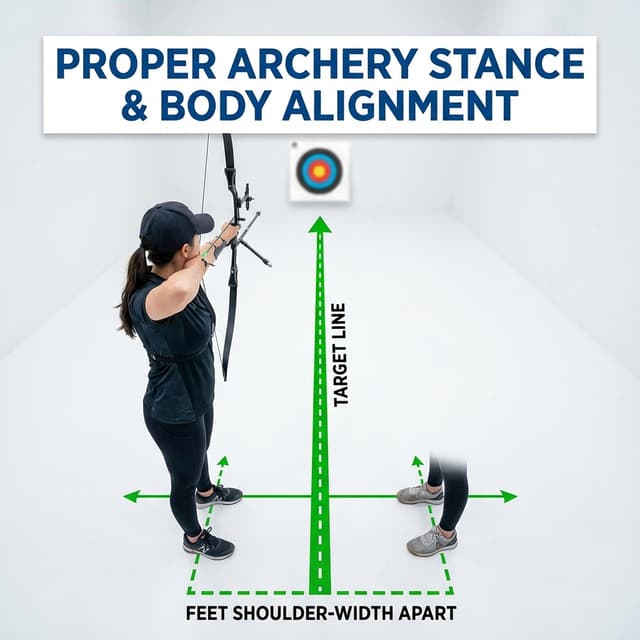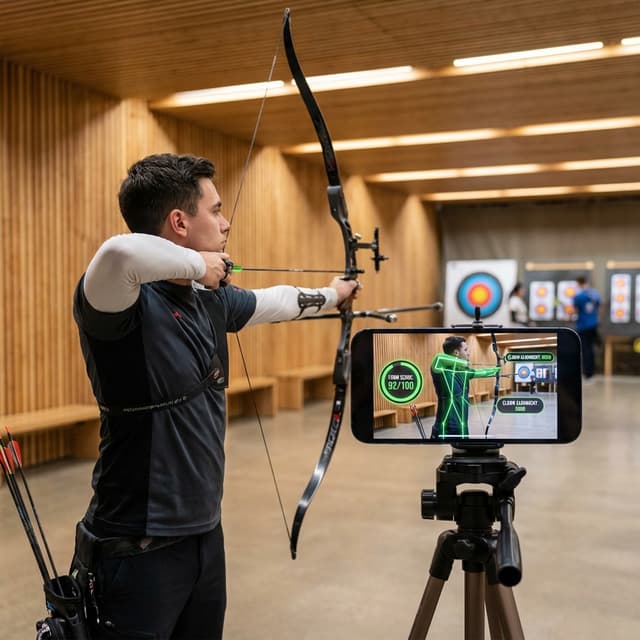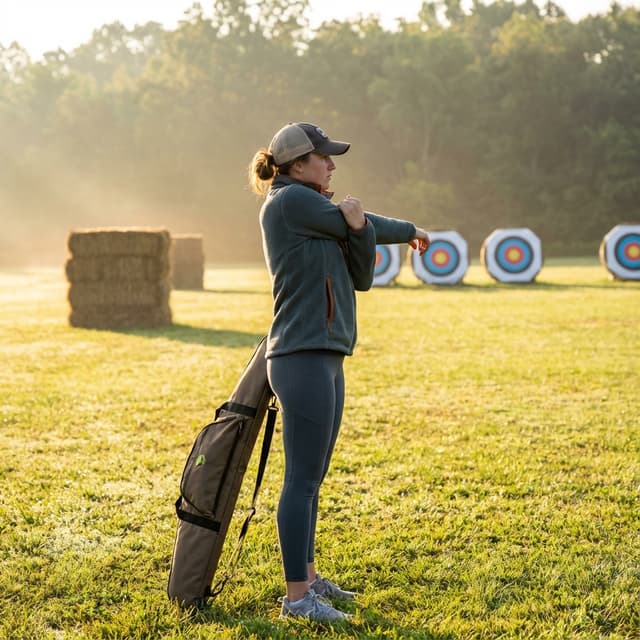
3D archery is one of the most exciting and fastest-growing disciplines in the sport. Instead of shooting at flat paper targets, you shoot at lifelike foam animal targets set at unmarked distances through woods, fields, and varied terrain. Whether you're a bowhunter looking to sharpen your skills or a target archer craving a new challenge, this complete guide to 3D archery shooting covers everything you need to get started.
⚡ Quick 3D Archery Facts
- • Shoot at lifelike foam animal targets in outdoor settings
- • Distances are typically unmarked—you must judge the range yourself
- • A typical course has 20-40 targets of varying sizes and distances
- • Any bow type can compete—compound, recurve, longbow, or crossbow
🦌 What Is 3D Archery?
3D archery is a form of field archery where participants walk through an outdoor course and shoot at three-dimensional foam targets shaped like animals. The targets are manufactured by companies like Rinehart, McKenzie, and Delta and are designed to simulate real hunting scenarios.
A standard 3D archery course features 20-40 stations (called "stakes"), each with a different animal target placed at a different distance and angle. Targets range from small critters like rabbits and turkeys to large game like elk and bears. The variety of target sizes, distances, terrain, and angles makes every course unique and challenging.
Types of 3D Archery Events
- • Club shoots — casual, local events perfect for beginners
- • IBO tournaments — International Bowhunting Organization competitive events
- • ASA tournaments — Archery Shooters Association circuit (most popular in the US)
- • IFAA 3D — International Field Archery Association events
- • Known distance — distance is marked (easier for beginners)
- • Unknown distance — you must judge the range yourself (standard competitive format)
🏹 Equipment for 3D Archery
One of the great things about 3D archery is that you can use whatever bow you already own. That said, certain equipment choices can give you an edge on the course. For a detailed breakdown of bow types, see our compound vs recurve comparison guide.
Essential Gear
- • Bow — any type works, compound is most popular
- • Arrows — use field points only (no broadheads)
- • Binoculars — essential for judging distance and seeing scoring rings
- • Rangefinder — for practice (not allowed in unknown-distance competition)
- • Comfortable hiking shoes — you'll walk 2-4 miles on a full course
- • Arrow puller — foam targets grip arrows tightly
Nice-to-Have Gear
- • Multi-pin sight — fixed pins at 20, 30, 40, 50 yards
- • Stabilizer — helps with uphill/downhill shots
- • Rain gear — events run in all weather conditions
- • Scorecard holder — keeps your card dry and accessible
- • Snacks and water — a full round takes 3-5 hours
- • Bug spray/sunscreen — you're outdoors all day
🎯 3D Archery Scoring Zones Explained
3D archery scoring is based on where your arrow lands on the foam animal target. Each target has scoring rings that represent vital organs, with higher points awarded for more precise hits.
ASA Scoring (Most Common)
IBO Scoring
Pro Tip: In competition, the scoring rings on 3D targets can be hard to see at distance. Good binoculars (8x or 10x) help you identify the exact scoring zones and plan your aiming point before stepping to the stake.
👁️ Distance Judging Tips for 3D Archery
Judging distance is the skill that separates great 3D archers from average ones. In unknown-distance competitions, rangefinders are not allowed, so your ability to estimate yardage accurately is paramount. Here are proven techniques the pros use.
📏 The Walk-Up Method
Mentally walk to the target in known increments. Most people can accurately visualize 20 yards. Walk 20 yards mentally to the target, then estimate the remaining distance. Practice this with a rangefinder to calibrate your mental yardstick.
🦌 The Body Size Method
Learn the actual body dimensions of common 3D targets. A full-size deer target is about 18 inches from back to belly. At 20 yards, that subtends a certain angle in your vision. Practice until you can estimate distance by apparent target size.
🌲 The Halfway Method
Find a landmark halfway between you and the target. Estimate the distance to that halfway point (shorter distances are easier to judge), then double it. This is particularly effective for longer shots over 35 yards.
🎯 The Bracketing Method
Determine the minimum and maximum possible distance. "It's definitely farther than 25 yards, and definitely closer than 35 yards." Then split the difference or lean toward the distance you feel most confident about.
⚠️ Distance Judging Traps
- • Uphill targets appear farther than they are—aim slightly lower
- • Downhill targets appear closer than they are—aim slightly lower (yes, lower both ways)
- • Open fields make targets appear farther
- • Dense woods make targets appear closer
- • Bright targets on dark backgrounds appear closer
- • Small targets (rabbits, turkeys) appear farther than they are
⛰️ Mastering Uphill and Downhill Shots
Angled shots are where many 3D archers lose points. The key principle: gravity only affects the horizontal distance, not the line-of-sight distance to the target. This means you should always aim for the horizontal distance, which is shorter than the actual distance on angled shots.
The Rule of Thumb for Angled Shots
- • Slight angle (10-20°): Subtract 1-2 yards from estimated distance
- • Moderate angle (20-30°): Subtract 2-4 yards
- • Steep angle (30-45°): Subtract 4-8 yards
- • Both uphill and downhill: Aim for shorter distance (yes, both directions)
- • Bend at the waist, don't raise or drop your bow arm
Pro Tip: The most common mistake on downhill shots is aiming too high. For steep downhill shots, bend at the waist to maintain proper form rather than dropping your bow arm. This keeps your anchor, alignment, and release consistent.
⚖️ 3D Archery vs Target Archery
3D Archery Advantages
- • More social—walk the course with friends
- • Varied terrain keeps it interesting
- • Develops practical hunting skills
- • New challenges on every course
- • Outdoor exercise (2-4 miles of hiking)
- • Relaxed, fun atmosphere at club shoots
Target Archery Advantages
- • Known distances—pure accuracy test
- • More accessible venues (indoor ranges)
- • Year-round shooting regardless of weather
- • Olympic discipline with clear progression path
- • Easier to track improvement with consistent scoring
- • Equipment is more standardized across classes
🚀 Getting Started in 3D Archery Competitions
Ready to try 3D archery? Here's your step-by-step guide to attending your first event.
Your First 3D Shoot: Step by Step
- 1. Find local shoots. Search for "3D archery near me" or check ASA/IBO websites. Most archery clubs host monthly 3D events that welcome beginners.
- 2. Contact the club. Call ahead and let them know you're new. Most clubs are incredibly welcoming and will pair you with experienced shooters.
- 3. Know your equipment class. Events have divisions based on bow type, accessories, and age. "Open" or "Hunter" class is typical for beginners.
- 4. Practice distance estimation. Spend a few sessions at the range guessing distances before checking with a rangefinder.
- 5. Bring the essentials. Bow, arrows with field points, binoculars, water, snacks, sunscreen, and comfortable walking shoes.
- 6. Arrive early. Give yourself time to register, warm up, and ask questions.
- 7. Have fun. Your first shoot isn't about winning—it's about learning the format and enjoying the experience.
✅ 3D Archery Etiquette
- • Don't touch others' equipment without permission
- • Stay quiet when someone is shooting
- • Walk behind the shooter, never in front of the stake
- • Pull your arrows carefully—don't rip them out at an angle
- • Keep pace—don't hold up groups behind you
- • Call scores honestly—sportsmanship is paramount
❓ Frequently Asked Questions
How much does it cost to enter a 3D archery shoot?▼
Can I use a recurve bow in 3D archery?▼
What's a good score for a beginner in 3D archery?▼
How long does a 3D archery round take?▼
Track Your 3D Archery Scores
ArcheryBuddy lets you log your 3D scores, track improvement across different courses, and analyze your distance-judging accuracy over time.