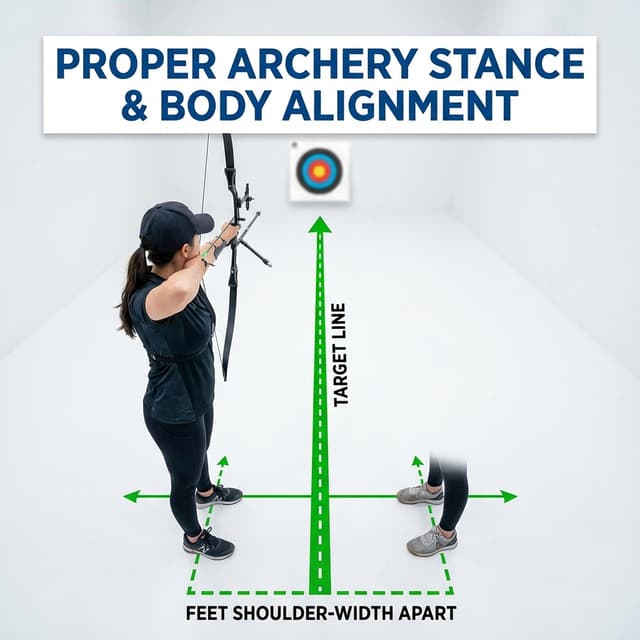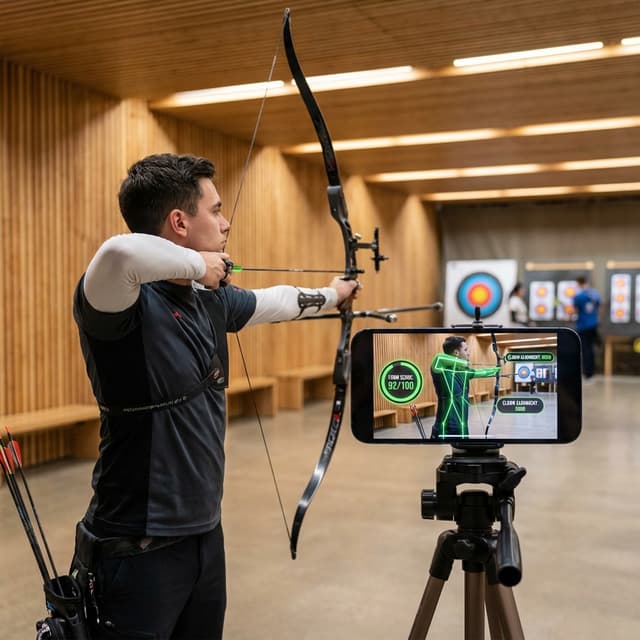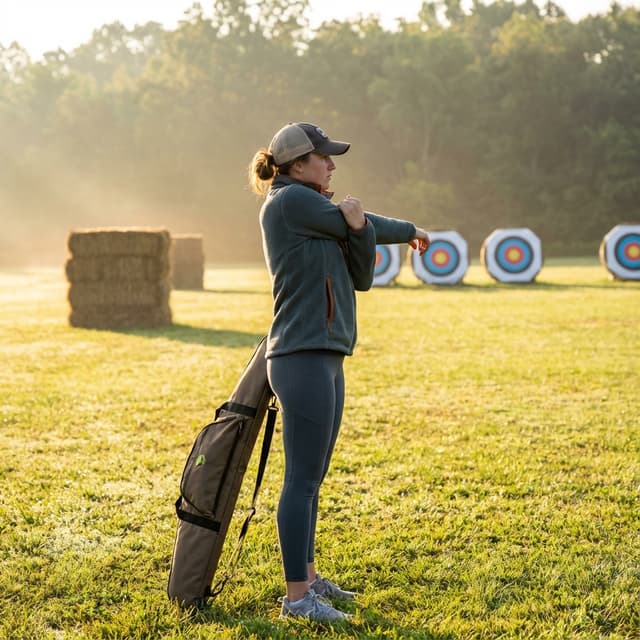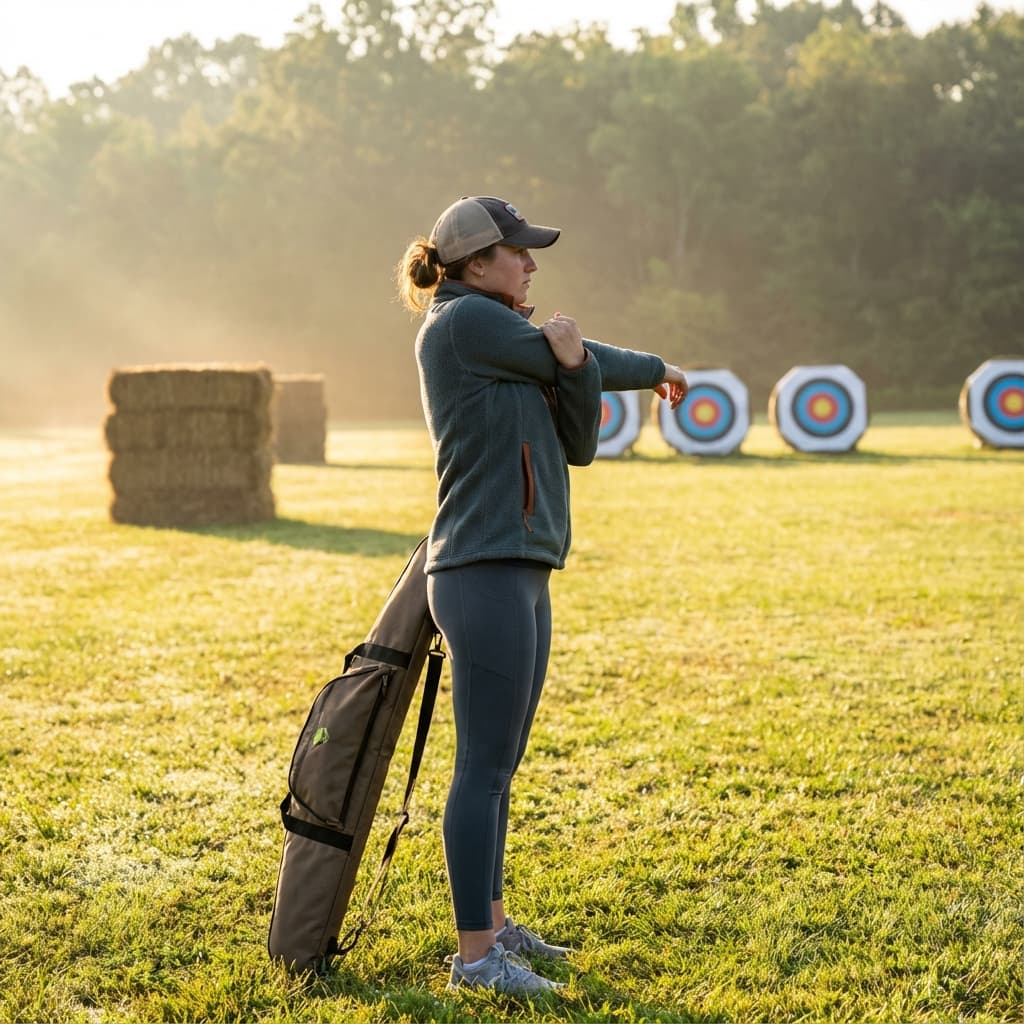
Archery might look like a calm, low-impact activity from the outside, but anyone who has shot a few ends knows better. Drawing a bow engages dozens of muscles, burns real calories, and offers mental health benefits that rival meditation. Here is the science behind why archery is genuinely good exercise—and how it compares to other popular activities.
💪 Muscles Used in Archery
A single archery shot activates a complex chain of muscles from your feet to your fingertips. Understanding which muscles are working helps you train smarter and avoid injury.
Back Muscles (Primary Movers)
- Rhomboids — Squeeze your shoulder blades together during the draw
- Trapezius — Stabilizes the shoulder girdle throughout the shot
- Latissimus dorsi — Powers the draw and controls back tension
- Posterior deltoid — Pulls the drawing arm back to anchor
Shoulder Muscles
- Rotator cuff (all four muscles) — Stabilizes both shoulders throughout the shot cycle
- Deltoids — The bow arm deltoid holds the bow steady against draw weight
- Supraspinatus — Works constantly to keep the bow arm elevated
Core Muscles
- Obliques — Resist rotation and maintain torso alignment
- Transverse abdominis — Provides deep stabilization for balance
- Erector spinae — Keeps your posture upright under load
Arms and Hands
- Forearm flexors — Grip the bow and hook the string
- Biceps and brachialis — Assist with drawing motion
- Finger flexors — Hold the string under tension until release
- Triceps — Extend and lock the bow arm
In a typical practice session of 100 arrows with a 30-pound bow, you are effectively lifting 3,000 cumulative pounds with your back and shoulder muscles alone. Compound that across a season and archery becomes a serious upper-body workout.
🔥 Calories Burned During Archery
The calorie burn from archery depends on intensity, draw weight, and whether you are shooting targets from a fixed position or walking a 3D course. Here are the numbers based on research and metabolic estimates:
| Activity | Calories/Hour (150 lb person) |
|---|---|
| Indoor target archery | 100–140 cal |
| Outdoor target archery | 140–160 cal |
| 3D / field archery (walking course) | 200–350 cal |
| Bowhunting (stalking/walking) | 250–400 cal |
| Walking (3.5 mph) | ~250 cal |
| Yoga (moderate) | ~180 cal |
| Bowling | ~175 cal |
While archery is not a high-calorie-burning cardio workout, it exceeds many people's expectations. A full tournament day—involving 6+ hours of shooting, walking, and standing—can burn over 1,000 calories. Field and 3D archery, which involve hiking between targets, provide a substantial cardiovascular component.
🏥 Physical Health Benefits
Upper Body Strength and Endurance
Repeatedly drawing and holding a bow builds functional strength in your back, shoulders, and arms. Unlike weight training, archery develops isometric endurance—the ability to hold a muscle contraction for extended periods. This translates to better posture and reduced back pain in daily life.
Improved Posture
Proper archery form requires an upright, aligned posture with shoulders back and down. Regular practice reinforces these postural habits, which carry over to your everyday stance and sitting position. Many archers report reduced neck and upper back tension after starting the sport.
Hand-Eye Coordination
Aiming and releasing at a target sharpens hand-eye coordination and fine motor control. Studies have shown that archery-based activities improve coordination metrics in all age groups, making it particularly valuable for both youth development and senior fitness.
Balance and Stability
Holding a proper stance while drawing and releasing a bow challenges your balance system. The core activation required for stability during a shot trains the same muscles used for fall prevention—making archery an excellent activity for older adults.
🧠 Mental Health Benefits
The mental benefits of archery are arguably even more significant than the physical ones. Archery is frequently described as "meditation with a bow," and the comparison is apt.
Stress Reduction
The focused breathing and concentration required during shooting naturally activates the parasympathetic nervous system, lowering cortisol levels. Many archers describe a "flow state" during practice that leaves them feeling calm and recharged.
Focus and Concentration
Each shot demands your full attention. Over time, this trains your brain to sustain focus for longer periods—a skill that transfers to work, studies, and other areas of life. Research on ADHD patients has shown archery can improve attention span.
Confidence Building
Watching your scores improve, hitting your first bullseye, or mastering a new distance provides measurable evidence of your progress. This tangible feedback loop builds self-efficacy that extends beyond the range.
Social Connection
Clubs, leagues, and tournaments create a supportive community. Archery is uniquely social—you can talk between ends, share tips, and compete alongside archers of all ages and abilities.
👥 Why Archery Is Good for All Ages
One of archery's greatest strengths as exercise is its accessibility. Unlike many sports, archery can be adapted to virtually any age or ability level:
- Children (6+) — Lightweight bows develop coordination, patience, and focus. Youth archery programs are growing rapidly worldwide.
- Teens and young adults — Competitive archery builds discipline and mental toughness. College archery programs offer scholarship opportunities.
- Working adults — A one-hour range session provides physical activity and stress relief without the joint impact of running or high-intensity workouts.
- Seniors — Low-impact, adjustable draw weight, and standing balance work make archery ideal for maintaining fitness in later years. Many competitive archers continue into their 70s and beyond.
- Adaptive athletes — Archery is a Paralympic sport with well-established adaptive equipment. Seated archery, mouth-drawn bows, and assistive devices make the sport accessible to people with a wide range of disabilities.
- Walk to retrieve your own arrows instead of waiting for someone else to pull them
- Shoot field or 3D archery courses for added cardio from hiking between targets
- Supplement archery with back and shoulder exercises to build shot endurance
- Stand (do not sit) during practice sessions to engage your core and legs
📊 How Archery Compares to Other Activities
| Benefit | Archery | Golf | Swimming | Running |
|---|---|---|---|---|
| Upper body strength | High | Low | High | Low |
| Cardio | Low-Med | Low | High | High |
| Mental focus | Very High | High | Medium | Medium |
| Joint impact | Very Low | Low | Very Low | High |
| Social component | High | High | Low | Medium |
| All-age accessibility | Excellent | Good | Good | Limited |
Track Your Archery Fitness Journey
ArcheryBuddy tracks your sessions, arrows shot, and form progress over time. See how consistent practice builds real fitness and watch your scores climb alongside your strength.
📋 Key Takeaways
- ✓Archery works back, shoulder, core, and arm muscles with every shot
- ✓You burn 100–150 calories per hour at the range, more with field/3D archery
- ✓Mental health benefits include stress reduction, improved focus, and confidence
- ✓Archery is low-impact and accessible to all ages and ability levels
- ✓Combine archery with strength training for maximum fitness and performance