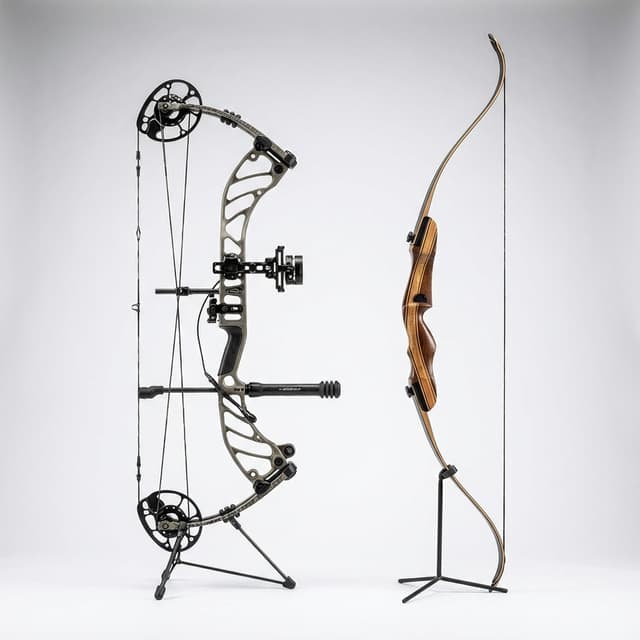
Your bow is a precision instrument. Whether you shoot a compound bow, a recurve, or a traditional longbow, proper bow maintenance is the difference between years of reliable performance and an expensive equipment failure at the worst possible moment. This complete bow care guide covers everything from daily cleaning habits to long-term storage—so your bow stays accurate, safe, and ready to shoot.
⚡ Quick Maintenance Checklist
- • After every session — wipe down limbs, inspect string, check hardware
- • Monthly — wax string, lubricate axles (compound), check cam timing
- • Annually — replace string & cables (compound), professional inspection
- • Never — dry fire your bow under any circumstances
🔧 Why Bow Maintenance Is Non-Negotiable
A neglected bow doesn't just shoot inaccurately—it can be genuinely dangerous. Cracked limbs, frayed strings, and loose hardware are all failure points that can cause injury. Beyond safety, a poorly maintained bow loses consistency: your draw weight changes as strings stretch, cam timing drifts, and arrow flight deteriorates. Regular bow care keeps your equipment performing exactly as the manufacturer intended.
For context on how equipment condition affects your shooting, see our guide on bow tuning — a well-maintained bow is far easier to tune and keep tuned.
⚠️ The Dry Fire Warning
Never dry fire a bow — firing without an arrow nocked is the single most damaging thing you can do. When you dry fire:
- • The energy meant for the arrow transfers violently into the bow's limbs
- • Limbs can crack or shatter explosively
- • Cams, axles, and cables can fail instantly
- • Injury to face, hands, and eyes is a real risk
- • Most manufacturer warranties are voided by a dry fire
🧹 Cleaning Your Bow After Every Session
A quick post-session wipe-down takes five minutes and prevents the gradual damage caused by dirt, moisture, and oils from your hands. Here's what to do every time you shoot.
Compound Bow Cleaning
- • Wipe limbs with a dry or lightly damp cloth — no harsh solvents
- • Clean the riser with a soft cloth, removing dirt from machined grooves
- • Inspect cams and wheels for fraying cable contact points
- • Check all Allen screws — sight, rest, quiver mounts
- • Remove debris from the arrow rest mechanism
- • Wipe down the string — don't pull the wax off, just remove grit
Recurve & Longbow Cleaning
- • Wipe limbs with a soft dry cloth — wood is moisture-sensitive
- • Check the limb tips for cracks around the string grooves
- • Inspect the riser-to-limb pocket connection for gap or movement
- • On wood bows, a very light coat of bow wax or linseed oil occasionally
- • Never leave a traditional bow strung when not in use
- • Check the brace height — it affects performance and stress on limbs
Avoid WD-40, acetone, or any petroleum-based solvent on your bow. These products can degrade the finish, damage rubber components, and cause limb delamination on fiberglass and carbon limbs. Use only products specifically formulated for archery equipment.
🔍 Limb Inspection: Spotting Problems Before They Become Dangerous
Limb inspection is the most critical safety check in bow maintenance. A cracked limb can fail catastrophically at full draw. Run your fingers along the entire limb surface at least monthly — tactile inspection catches cracks that are hard to see.
What to Look (and Feel) For
- • Cracks or delamination — any separation of the limb layers is a stop-shooting red flag
- • Twist in the limb — limbs should be perfectly flat when viewed from the tip
- • Unusual bends or warps — a limb that flexes unevenly is fatigued
- • Splinters or chips on the limb edges, especially around the tip grooves
- • String groove wear — on recurves, the tip grooves can wear and cause string slippage
- • Limb bolt torque (compound) — limb bolts should be even and tight; don't overtorque
Do not shoot a bow with a cracked or delaminating limb. Even a hairline crack can propagate to full limb failure in one draw. Take the bow to a pro shop for assessment. In most cases, limb replacement is inexpensive compared to the cost of an injury.
🪢 Bowstring Care & Replacement
Your bowstring is a high-tension, high-cycle component that wears with every shot. A frayed or stretched string affects accuracy, draw weight, and — when it fails — can injure you and destroy your bow. String care is non-negotiable.
How to Wax Your Bowstring
- Use archery-specific string wax — beeswax-based products work well
- Apply wax by rubbing it along the string strands (not the serving — where the arrow nocks)
- Work the wax in with your fingers using friction heat to melt it into the fibers
- Wipe off any excess wax with a clean cloth
- The string should feel slightly tacky, not coated in visible wax
- Wax every 2-4 weeks of regular shooting, or when the string looks dry and fuzzy
When to Replace Your String
| Sign | Action |
|---|---|
| Visible fraying or broken strands | Replace immediately — stop shooting |
| Peach fuzz / fuzzy appearance | Wax soon; monitor closely |
| Serving separating at nock point | Re-serve or replace string |
| Groups shifting — bow not re-tuned | Check string stretch; may need replacement |
| 12 months of regular shooting | Replace proactively (compound bows) |
⚙️ Compound Bow Maintenance: Cams, Axles & Cables
Compound bows have moving parts that need regular attention. Cam timing, axle lubrication, and cable condition all affect accuracy and longevity.
Cam Timing
On two-cam and hybrid-cam bows, both cams must reach full draw simultaneously. When cam timing drifts — usually due to cable stretch — you get inconsistent nock travel, poor arrow flight, and added stress on one limb. Check cam timing monthly by drawing the bow slowly and watching whether both cams roll over together. If they don't, adjust the yoke or have a pro shop do it. See our detailed bow tuning guide for the complete cam timing process.
Axle Lubrication
- Use bow-specific axle lube or a dry PTFE lubricant — never WD-40
- Apply a small drop to each axle pin, on both sides of each cam
- Work the cam back and forth to distribute the lubricant
- Wipe away any excess — you don't want lubricant on your string or cables
- Lubricate every 1-2 months or if you hear squeaking during draw
Cable & Slide Inspection
Cables on a compound bow take enormous stress. Inspect them monthly for fraying, kinking, or unusual wear where they contact the cam. The cable slide or roller guard should move freely and show no groove worn into it. A worn slide causes cable lean and poor arrow flight.
🏠 How to Store a Bow Properly
Improper storage is one of the most common causes of bow damage. Whether you're storing your bow for a week or over winter, following the right bow storage practices preserves its performance and your investment.
Do This
- • Store in a cool, dry place away from direct sunlight
- • Use a bow case or sock to prevent dust and scratches
- • Unstring recurves and longbows when not in use for more than a day
- • Hang compound bows vertically or lay flat — avoid resting on limbs
- • Maintain moderate humidity — 40-60% is ideal for wooden bows
- • Wax the string before long-term storage
Never Do This
- • Never store in a hot car — heat warps limbs and degrades adhesives
- • Never lean against a wall under load — creates limb warp over time
- • Never store strung (traditional bows) — fatigues the limbs permanently
- • Never store in a damp basement — moisture causes delamination and rust
- • Never store with accessories attached that put pressure on the riser
- • Never store near chemicals or paint fumes — damages finishes and materials
Before storing a compound bow for a season, have a pro shop inspect the strings and cables, lubricate all axles, and check limb bolt torque. Coming back to a well-prepped bow in spring means you can shoot immediately instead of spending your first session troubleshooting.
✈️ Traveling With Your Bow
Whether driving to a tournament or flying to a destination hunt, your bow needs proper protection. Travel is one of the highest-risk periods for bow damage.
Travel Checklist
- 1. Use a hard case for air travel. A padded hard-shell case is mandatory. TSA requires bows to be checked baggage, unstrung (for recurves), in a locked hard case with the arrows declared.
- 2. Relieve string tension for long trips. On a compound bow, back off the limb bolts by 2-3 turns to reduce string tension during transit — then re-torque on arrival.
- 3. Pad pressure points. Wrap cams and accessories in foam or cloth to prevent rattling and contact damage inside the case.
- 4. Carry your sight and accessories separately. Remove and pack fragile accessories (sight, stabilizer) individually to prevent damage to the riser.
- 5. Inspect on arrival. Before shooting, check limbs, string, cam timing, and all screws. Travel vibration can loosen hardware.
- 6. Let the bow acclimate. Moving between very different climates (e.g., cold airport to hot outdoors) — give your bow 30 minutes before shooting.
🏪 When to DIY vs. When to Visit a Pro Shop
| Task | DIY | Pro Shop |
|---|---|---|
| Waxing the string | ✅ Easy DIY | — |
| Cleaning & wiping down | ✅ Easy DIY | — |
| Tightening sight/rest screws | ✅ Easy DIY | — |
| Axle lubrication | ✅ DIY with right lube | — |
| String & cable replacement | Not recommended without press | ✅ Pro Shop |
| Cam timing adjustment | Advanced DIY only | ✅ Pro Shop recommended |
| Cracked limb assessment | — | ✅ Pro Shop always |
| Annual inspection | — | ✅ Pro Shop annually |
🏹 Don't Forget Your Arrows
Arrow maintenance is often overlooked, but a damaged arrow can be as dangerous as a damaged bow. Carbon arrows in particular can develop micro-fractures that are invisible to the eye but cause explosive failure mid-flight.
Arrow Inspection Protocol
- • Flex test every carbon arrow before shooting — hold each end, gently flex. Any cracking sound means retire that arrow immediately.
- • Inspect nocks for cracks or splits — a broken nock causes terrible flight and can dry-fire the bow.
- • Check inserts are glued tight — a loose insert causes the point to separate mid-flight.
- • Inspect fletching — missing or damaged vanes significantly affect arrow stability and accuracy.
- • Straightness check — roll aluminum arrows on a flat surface; any wobble indicates a bend.
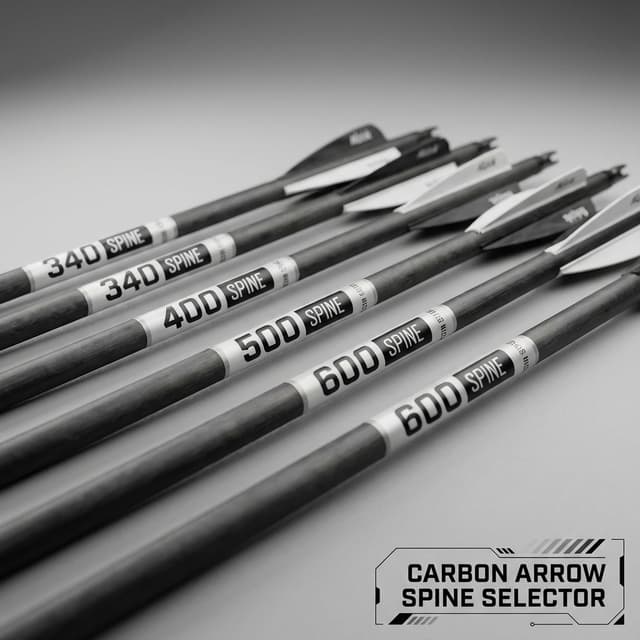
For guidance on choosing the right arrows for your setup, see our arrow spine selection guide.
📌 Complete Bow Maintenance Schedule
After Every Shoot:
- Wipe down limbs, riser, and cams
- Inspect string for fraying or separation
- Check all screws and hardware are tight
- Flex-test carbon arrows before returning to quiver
Monthly:
- Wax the bowstring
- Lubricate cam axles (compound)
- Run fingers along limbs for cracks or delamination
- Check cam timing (compound dual-cam bows)
Annually:
- Replace strings and cables (compound bows)
- Full professional inspection at a pro shop
- Replace peep sight if serving is worn
- Retire any arrows showing wear on inserts or nocks
The few minutes you invest in bow maintenance after each session add up to years of reliable, accurate shooting. Treat your bow like the precision instrument it is, and it will reward you with consistent performance every time you step up to the line.
Track Your Shooting Sessions with ArcheryBuddy
Log every session, monitor your equipment changes over time, and track how maintenance (like a new string or cam adjustment) affects your scores. ArcheryBuddy keeps all your archery data in one place.