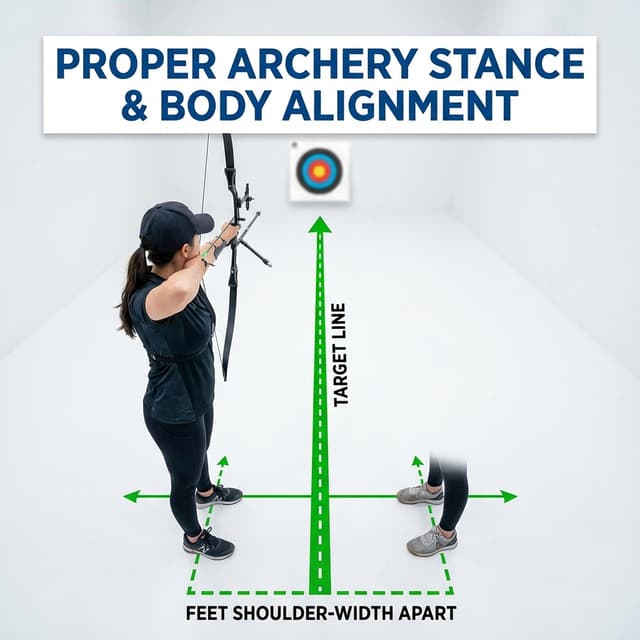
Archery is one of the safest sports in the world—statistically safer than golf, bowling, and even badminton—but only when proper safety rules are followed. Whether you shoot at a club range, in your backyard, or in the field, these rules are non-negotiable. This guide covers everything from range commands to equipment inspection so you can shoot confidently and safely.
⚠️ The Three Golden Rules of Archery Safety
Always Point Downrange
Never nock an arrow or draw a bow unless you are on the shooting line and pointing at the target. Treat a nocked bow like a loaded firearm.
Know Your Backdrop
Always know what is behind and beyond your target. An arrow can travel 200+ yards. Ensure a safe backstop is in place and no people or animals can wander into the danger zone.
Never Dry Fire
Never release the bowstring without an arrow nocked. Dry firing can shatter limbs, destroy cams, and send debris into your face. It is the single most dangerous thing you can do with a bow.
📢 Standard Range Commands
Every organized range uses a standard set of whistle or verbal commands. Learning these is mandatory before your first session. Here are the universal commands used at most ranges worldwide:
"TWO WHISTLES" or "ARCHERS TO THE LINE"
Move to the shooting line. You may straddle the line but do not nock an arrow yet. This is your preparation signal.
"ONE WHISTLE" or "BEGIN SHOOTING"
You may now nock an arrow and begin shooting. Fire only at your own target, only downrange, and only when the range is clear.
"THREE WHISTLES" or "RETRIEVE ARROWS"
All bows must be racked or set down. Walk (do not run) to the targets to retrieve your arrows. Ensure all archers have stopped shooting before anyone steps past the shooting line.
"MULTIPLE RAPID WHISTLES" or "CEASE FIRE / EMERGENCY STOP"
Stop shooting immediately. Do not release the arrow. Carefully let down your draw, remove the arrow, and place your bow on the rack. This means someone or something has entered the range and there is an immediate safety concern.
If you are shooting at a range for the first time, ask the range officer to walk you through their specific commands before you start. Some ranges use colored flags or lights in addition to whistles.
🔍 Equipment Inspection Routine
Inspect your equipment before every session. A cracked limb or frayed string can fail catastrophically under load. Here is a pre-shooting checklist:
| Component | What to Check | If Damaged |
|---|---|---|
| Bowstring | Fraying, broken strands, serving separation | Replace immediately |
| Limbs | Cracks, delamination, twisting | Do not shoot—replace limbs |
| Arrows | Cracks, bends, loose points or nocks | Discard damaged arrows |
| Nocking point | Loose or sliding position | Re-tie or replace |
| Rest / plunger | Loose screws, bent wire | Tighten or replace |
| Cams (compound) | Timing, cable wear, bearing noise | Take to pro shop |
Carbon arrows must be flex-tested before every use. Grip each end and flex the shaft slightly while listening and feeling for cracks. A cracked carbon arrow can shatter on release, sending splinters into your bow hand. If you find any damage, snap the arrow in half and discard it. Never shoot a questionable carbon arrow.
👤 Personal Safety and Protective Gear
Arm Guard
Protects your bow forearm from string slap. Essential for beginners and recommended for all archers. String slap causes painful bruising and can affect your willingness to shoot properly.
Finger Tab or Glove
Protects your drawing fingers from string friction. Without protection, the string can cause blisters and nerve damage after prolonged shooting. Compound shooters use mechanical releases instead.
Chest Guard
Keeps loose clothing away from the bowstring. A snagged shirt or jacket can deflect the string and send the arrow wildly off course. Always tie back long hair for the same reason.
Proper Footwear
Closed-toe shoes are mandatory at most ranges. Arrows on the ground are a puncture hazard, and outdoor ranges may have uneven terrain. No sandals or bare feet.
🤝 Range Etiquette
Safety and etiquette go hand in hand. Proper range behavior keeps everyone safe and creates an enjoyable shooting environment:
- Never walk in front of the shooting line while anyone is shooting, even if you think they have stopped.
- Do not touch another archer's equipment without their explicit permission. Bows are personal and often precisely tuned.
- Keep your voice low during shooting. Sudden loud noises can startle archers at full draw, causing erratic releases.
- Wait for all archers to finish before anyone retrieves arrows. Do not rush ahead, even if you have finished your end.
- Approach targets carefully when pulling arrows. Walk to the side of the target, not directly behind it, so you do not accidentally step on arrows buried in the ground.
- Pull arrows straight out by gripping close to the target face. Rocking or angling arrows damages both the target and the arrow shaft.
- Help beginners — if you see someone struggling with safety, politely offer guidance. Everyone was new once.
🌦️ Weather and Environmental Safety
Lightning
Stop shooting immediately if you hear thunder or see lightning. Metal bow components, carbon arrows, and open fields make archers vulnerable to lightning strikes. Seek enclosed shelter—not just a covered structure. Wait at least 30 minutes after the last thunder before resuming.
High Wind
Strong gusts can push arrows far off course, creating safety hazards if arrows leave the range area. If winds exceed 20–25 mph, consider stopping or shortening your shooting distance. Secure targets and stands against wind to prevent them from toppling.
Extreme Heat
Hydrate frequently, wear sun protection, and take breaks in shade. Extended exposure to heat above 95°F (35°C) can affect concentration and muscle control, increasing the risk of errors. Also note that extreme heat can damage some bow limb materials.
Cold Weather
Cold muscles are more prone to strain. Extend your warmup routine in cold conditions. Compound bow cables and limbs can become brittle in extreme cold. Wear layered clothing that does not interfere with the bowstring.
🏠 Backyard Shooting Safety
Shooting in your backyard is legal in many areas but requires extra precautions since you do not have range infrastructure protecting you:
- Check local laws — Some municipalities prohibit discharging projectiles within city limits. Contact your local government before setting up.
- Use a solid backstop — A hill, archery netting, or stacked bales behind the target. The backstop must stop arrows even if you miss the target entirely.
- Establish a safety zone — Mark a clear danger zone extending at least 50 yards beyond and 20 yards to each side of the target. No one should enter this zone during shooting.
- Communicate with family and neighbors — Let them know when you are shooting. Consider posting a visible "Archery in Progress" sign.
- Secure the area from children and pets — Lock up equipment when not in use. Never leave a strung bow and arrows unattended in an accessible area.
Shoot Safely, Track Smartly
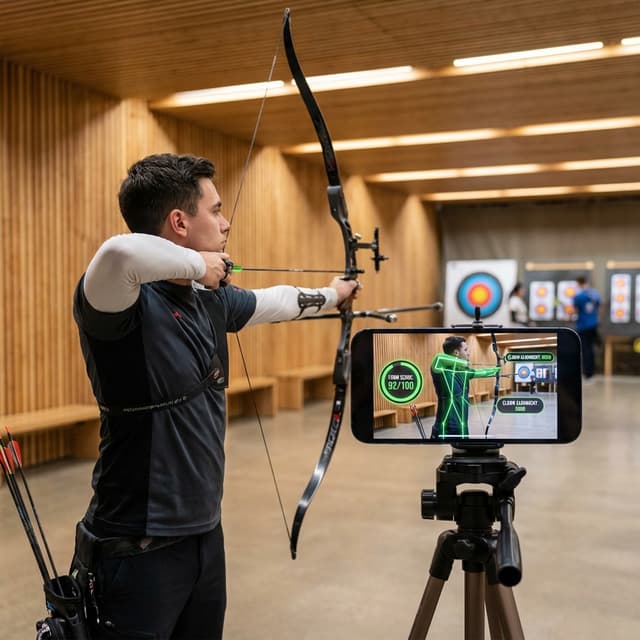
ArcheryBuddy helps you build consistent, safe practice habits. Log every session, track your equipment maintenance, and get AI form analysis to improve safely and efficiently.
📋 Key Takeaways
- ✓Always point downrange, know your backdrop, and never dry fire
- ✓Learn and follow standard range commands before shooting at any range
- ✓Inspect your bow, string, and arrows before every session
- ✓Wear proper safety gear: arm guard, finger tab, chest guard, closed-toe shoes
- ✓Stop shooting in lightning, high winds, or if anyone enters the range area